2026 Stage 7

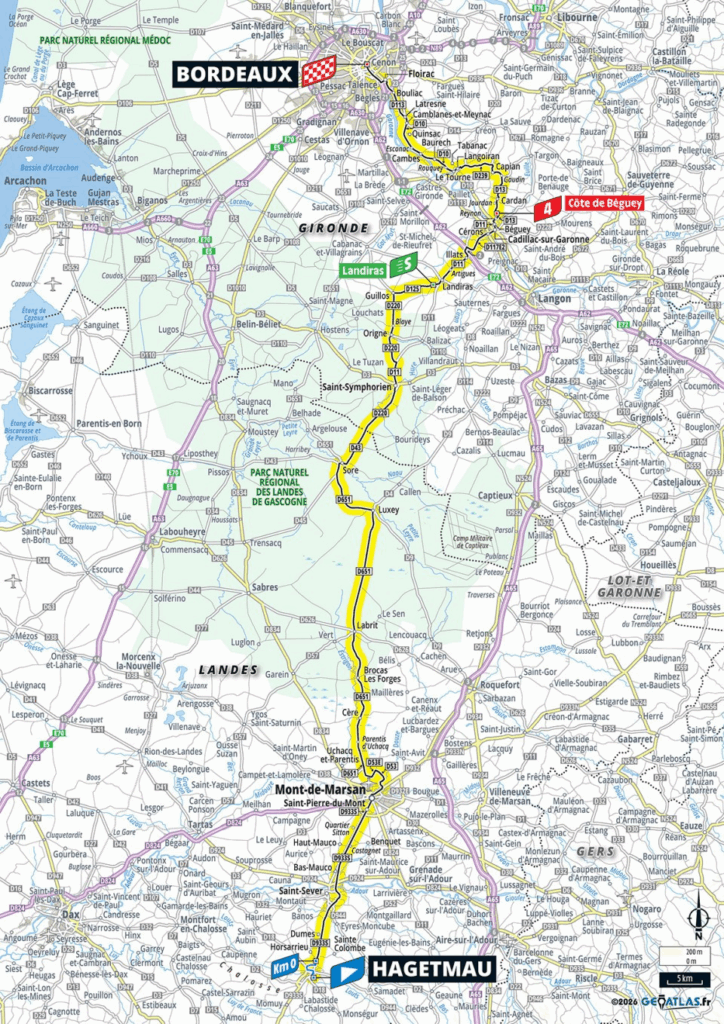
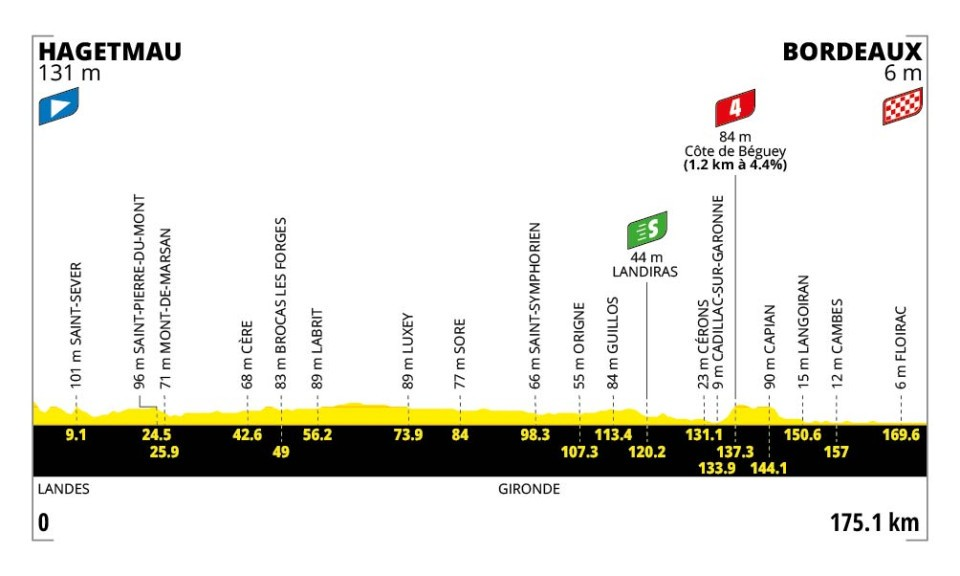
Hagetmau > Bordeaux

With the Pyrenees behind it and its sights set on Bordeaux, the peloton will pass through the Landes’ forests, which offer a small opportunity for a breakaway to catch out the sprinters’ teams. But if they’re focused and totally committed to their objective, the sprint trains will arrive as scheduled on the banks of the Garonne for a high-speed showdown adjacent to Place des Quinconces. A classic stage of its kind. 
Image
Image
Image

2026 Stage 6

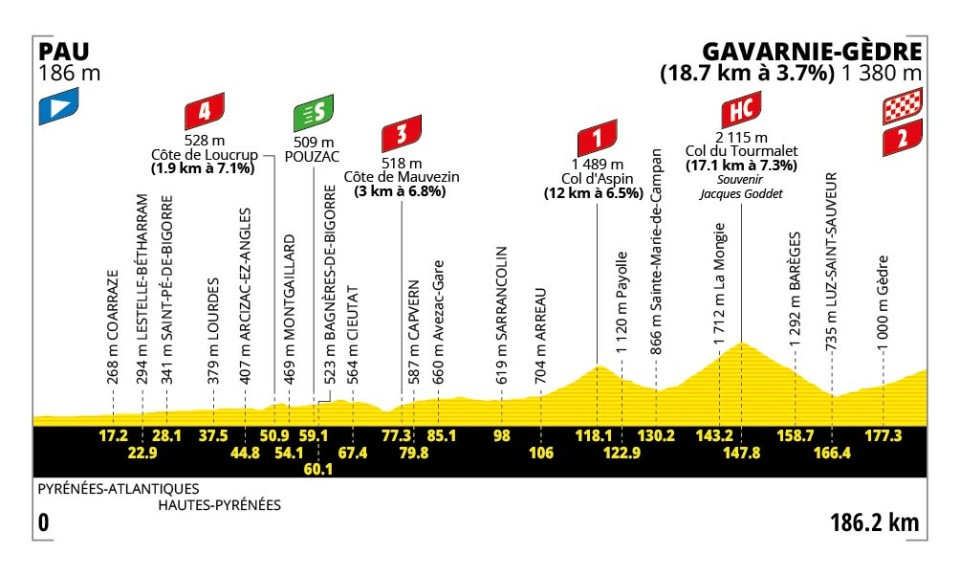
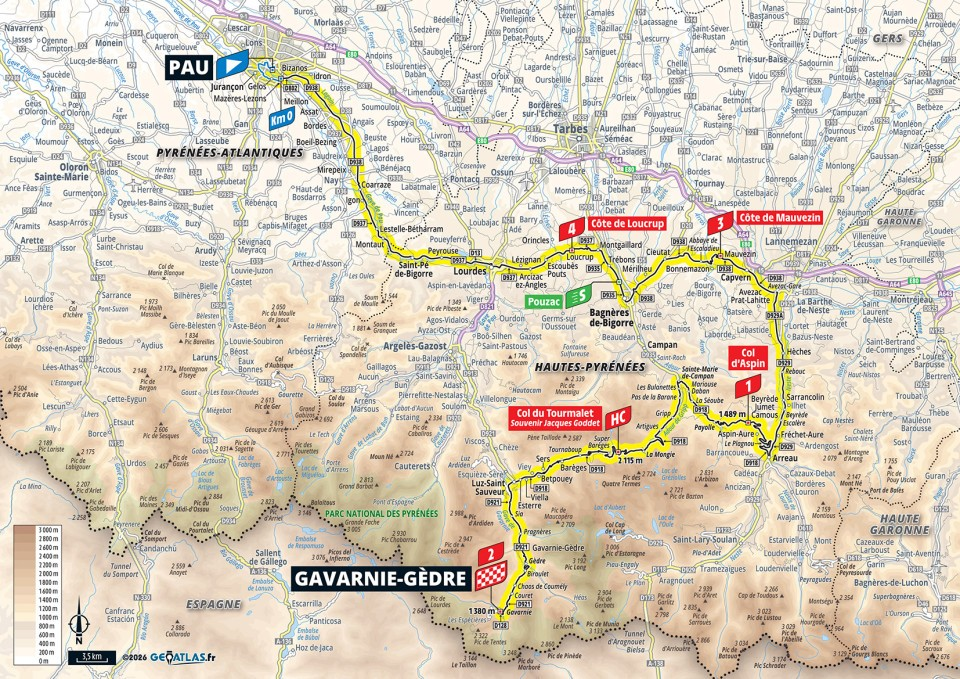
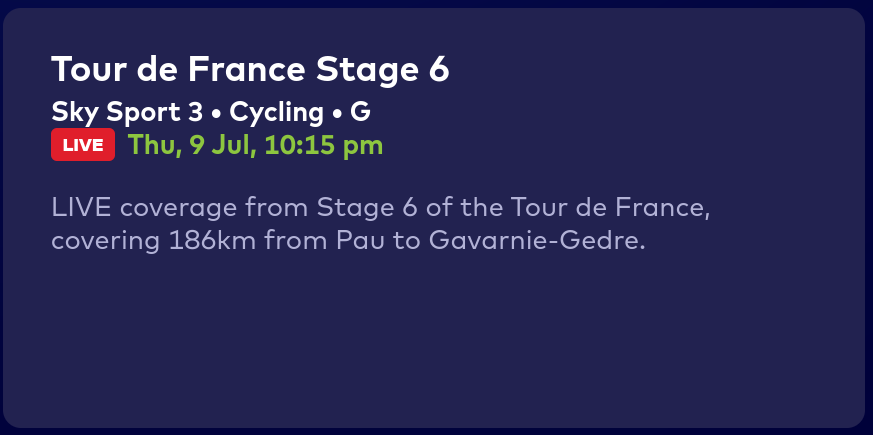
Pau > Gavarnie-Gèdre

The most demanding of the Pyrenean stages combines the classic with the new. A showdown between the Tour’s big favourites is quite possible on the climbs of the Col d’Aspin and the Col du Tourmalet, assuming, of course, that they decide to join battle with more than 40 kilometres of the stage remaining. If they hold back, though, the day’s spoils will be contested by the best climbers in the breakaway in the sumptuous setting of the Cirque de Gavarnie, which they’ll reach after a long but rolling climb – 18.7 kilometres at an average gradient of 4%. 

Image
Image
Image

2026 Stage 5

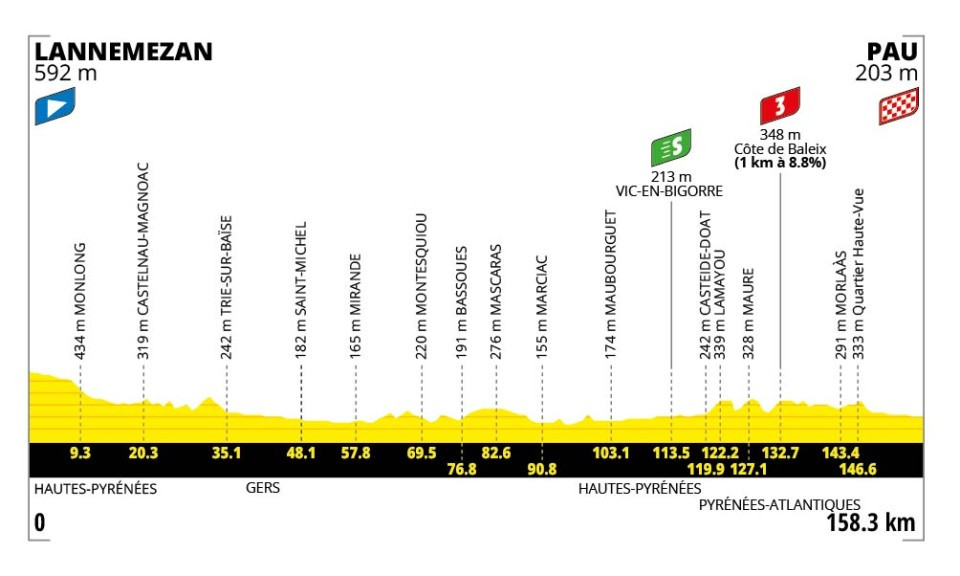
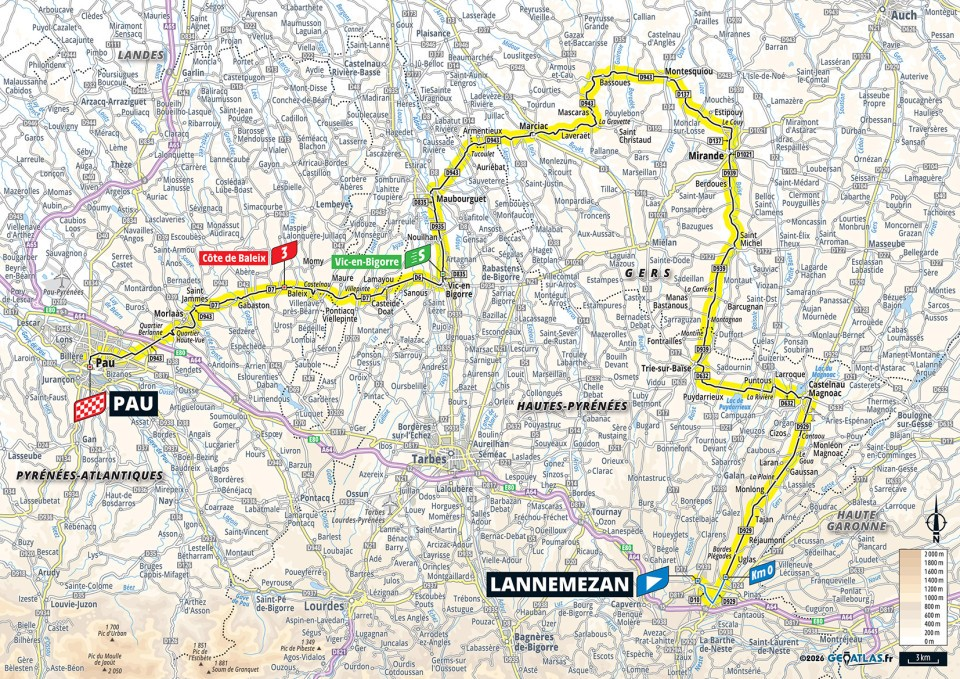
Lannemezan > Pau

You have to go back to 2015 and then as far as 1992, when the Grand Départ was held in Spain, to find a Tour de France that didn’t feature a bunch sprint until the fifth day of the race. A straight forward route has been mapped out. In the wake of those, the sprinters will get the chance to show what they’re made of in Place de Verdun. The sprinters’ teams will be determined to do all that’s required to control the day’s breakaways. 

Image
Image
Image

2026 Stage 4

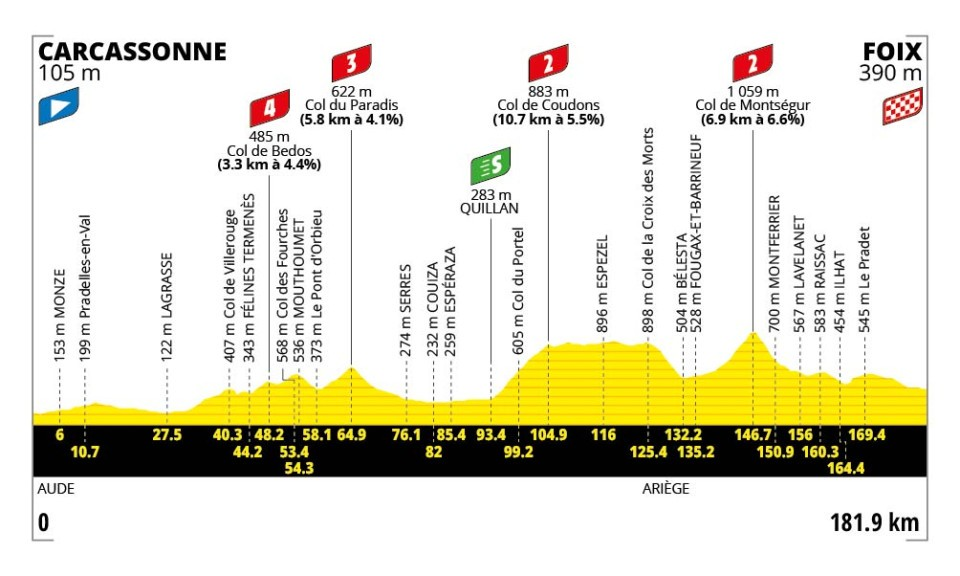
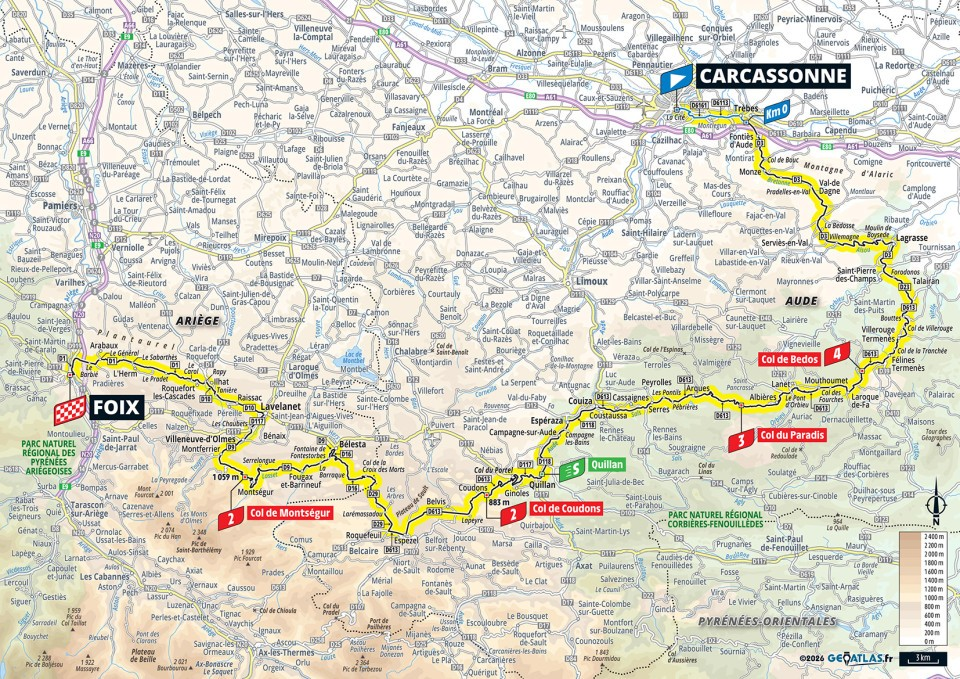
Carcassonne > Foix

Crossing Cathar country and then tackling some of the less challenging climbs in the Ariège opens up a number of possibilities. There could well be a tense duel between a group of breakaway riders and those sprinters who can hold their own in the hills. Whatever happens, by the time the riders go over the Col de Montségur, 34km from the finish, the first selection of contenders for victory in the shadow of the Château de Foix will already have been made. 

Image
Image
Image

2026 Stage 3

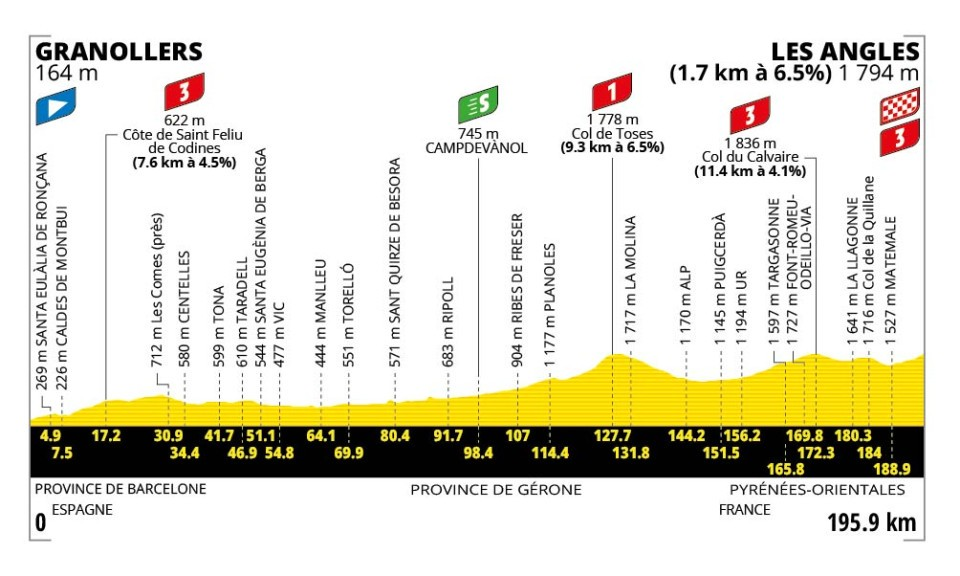
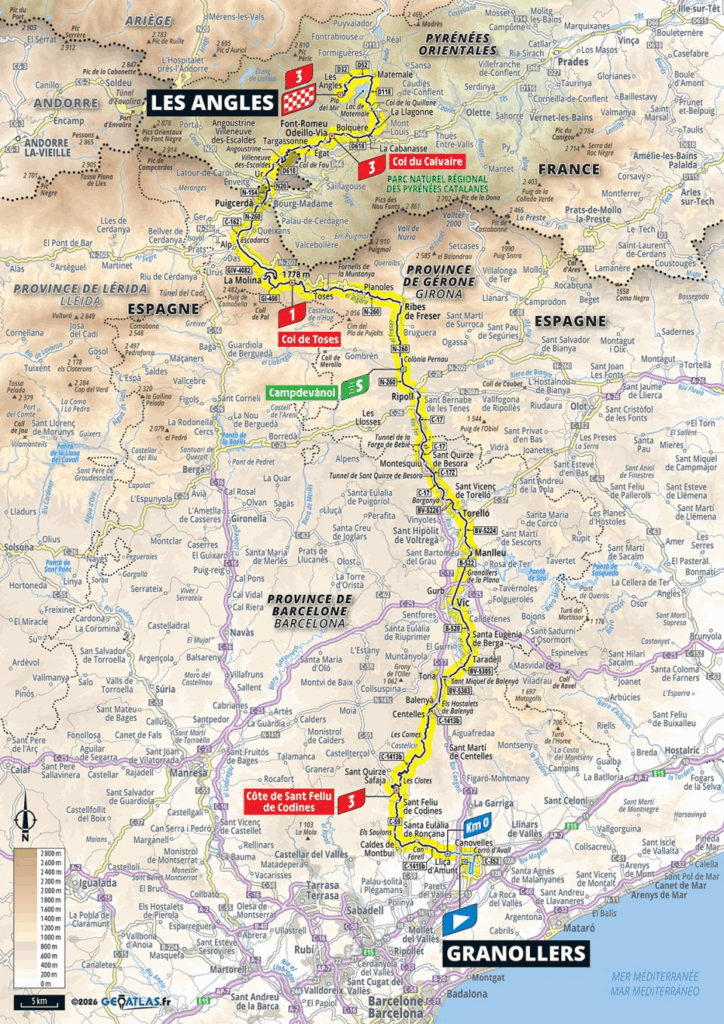
Granollers > Les Angles

Entering the Pyrenees on just the third day of racing is likely to bring new protagonists to the fore, although this stage’s profile is more likely to trigger an attack by a group of strong breakaway riders rather than encouraging the world’s best climbers onto the offensive. Despite 3,950 metres of vertical gain that include the climb up the Col de Toses before the riders leave Spain, the plateaux surrounding Font-Romeu and the climb to Les Angles (1.7km at an average gradient of 7%) are more likely to provide a springboard for a surprise guest.  

Image
Image
Image

2026 Stage 2

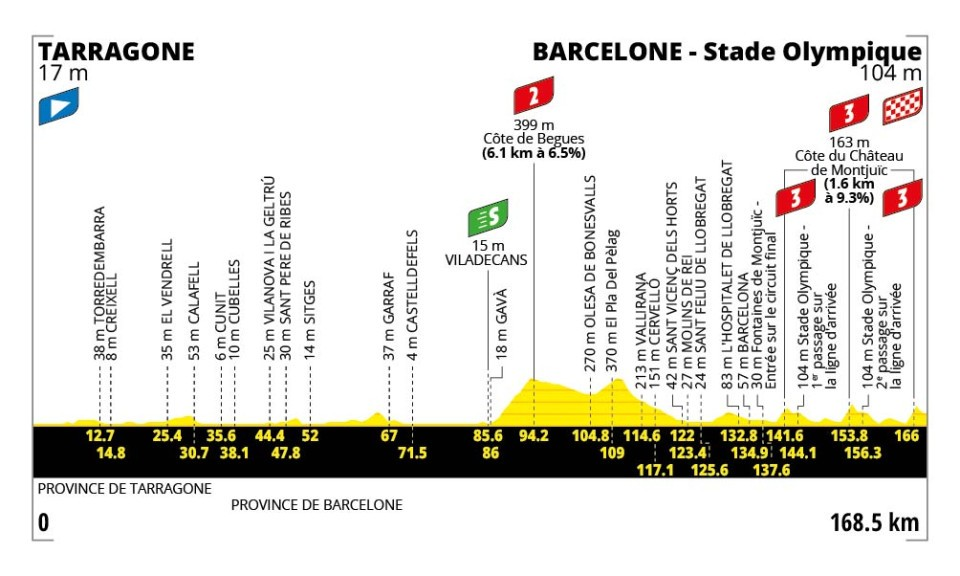
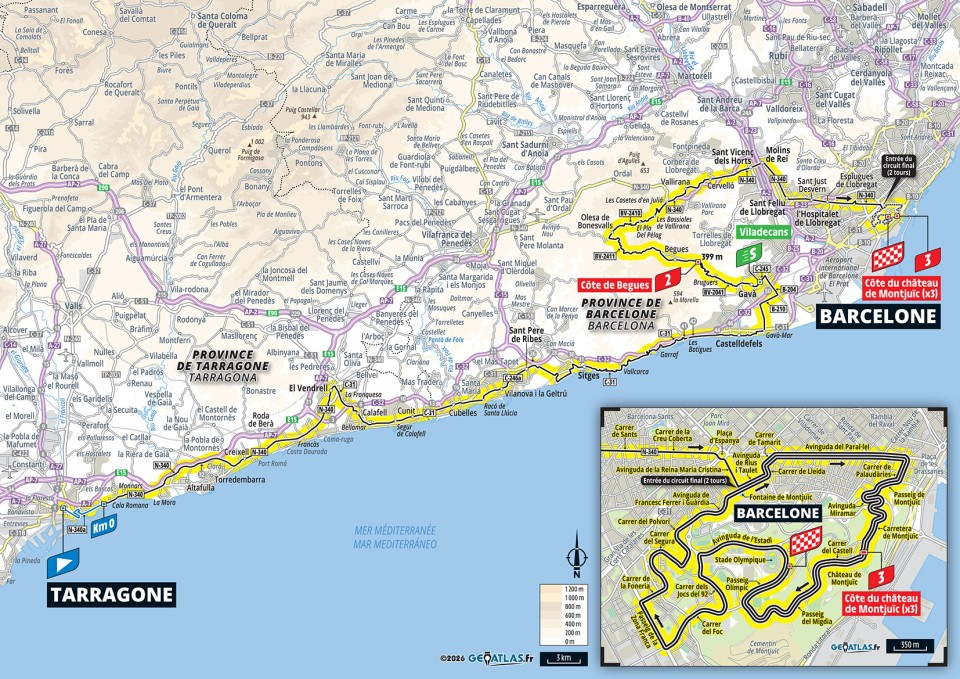
Tarragona > Barcelona

Barcelona’s Montjuïc hill is one of the must-see locations in the cycling world, largely thanks to it being the traditional finale for the Tour of Catalonia. The most powerful puncheurs are right at home here: the last three winners on the stage over this outcrop were Primož Roglič (2025), Tadej Pogačar (2024) and Remco Evenepoel (2023), each a good fit of the profile of the likely winner. In fact, given the run of climbs in the final kilometres, the chance of a rider of this type winning will be increased because the circuit will be even more gruelling than it is during the Catalan event each spring.   

Image
Image
Image

2026 Stage 1

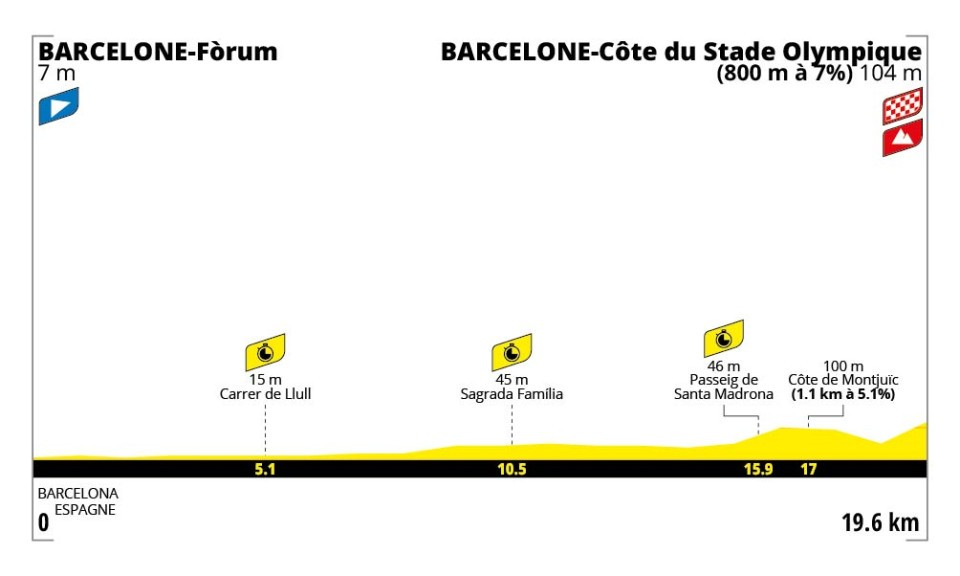
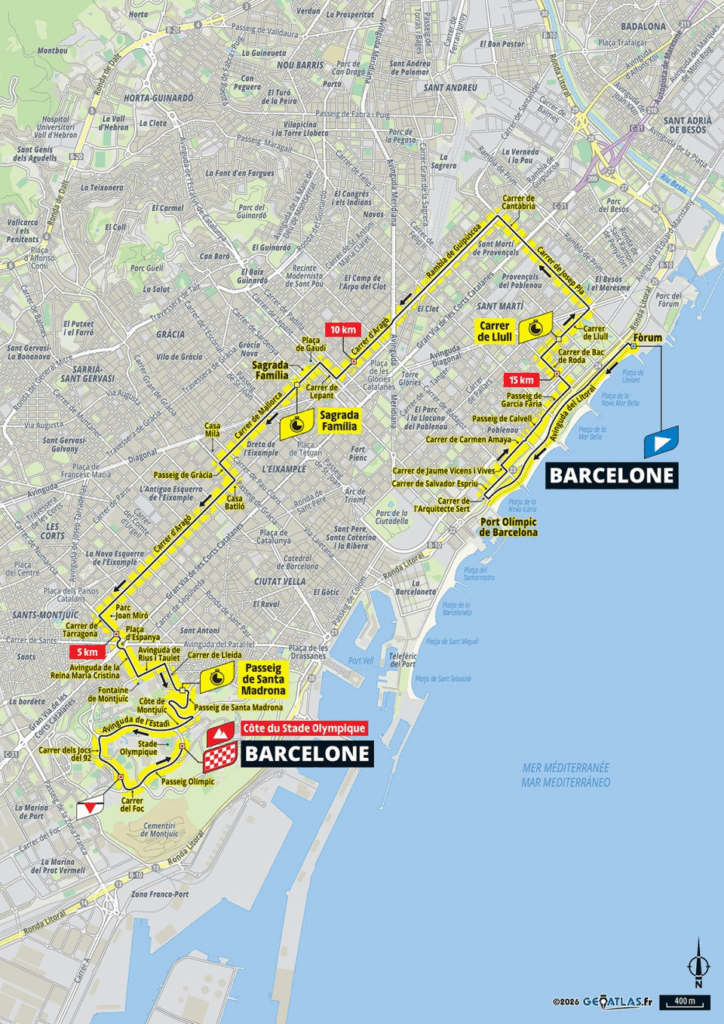
Barcelona > Barcelona (team time trial)

The 2026 Tour de France begins with an innovation. The last team time trial was held in Brussels during the 2019 edition, but on this occasion the teams will be competing under a very different format. The idea of individual times being taken in a team time trial has been successfully tested at Paris-Nice since 2023. What’s absolutely certain is that the favourites won’t be able to hide: the Montjuïc finale will highlight the strongest riders.  

Image
Image
Image